Dear fellow bloggers,
Are you of the same opinion that the best thing happening for mobiles is nothing but Android...? The cheeky and smart OS smartly acquired and marketed by marketing geniuses at the house of Google...
Saturday, August 20, 2011

Thursday, July 15, 2010
GM: Chevy Volt Battery Warranty is eight years/100k miles

The Chevy Volt is finally coming together. GM just went public with the details surrounding its battery warranty and it’s on the same level as the Prius’s. The auto maker will cover the Volt’s LG Chem lithium-manganese pack for eight years or 100,000 miles. This comes after extensive testing over a three-year period in which testers logged over 1 million miles of driving and 4 million hours on the battery packs. Needless to say that GM tested the entire system thoroughly.
GM-Volt posted some of the Volt’s key features that actually validate a lot of the questions I had during my Volt mule test drive last year.
Thermal Management: the intrinsic thermal management system allows teh pack and car to operate flawlessly from -13 degrees Fahrenheit (-25 C) and as high as 122 degrees Fahrenheit (+50 C). In cold weather the cells are warmed by the generator and in cold weather they are chilled.
Diagnostics: there are more than 500 diagnostic tests on the pack that run 10 times per second. 85 percent ensure the pack is operating safely, 15 percent ensure durability.
Cell design: the LG chemistry ensures high power and long life.
Energy Management: by not fully charging or discharging the battery ensures the longest possible life.
It’s good to see GM backing the Volt’s battery system with a long warranty. Batteries degrade over time and since the Volt’s powertrain is directly powered from the battery unlike in a traditional hybrid where they simply assist, owners should not have to worry about their life for a while.
Techtyphooon
Apollo 16 site photographed from orbit

I love seeing the shots that NASA has been releasing from the Lunar Reconnaissance Orbiter! The latest is from the Apollo 16 site, and they really timed this one right. The LRO was passing over the site exactly at noon (local time of course) so there’s a minimum amount of shadowing, and a maximum amount of contrast.
The resolution on the picture is truly amazing, you can see where the lunar module landed, where they parked the LRV, and even trails where the astronauts walked across the surface. There’s even a mark leading to where the astronauts conducted moonquake experiments by setting off explosives! This picture is much cleaner then the previous shot, which showed the Apollo 14 site, but was taken at a different time of day and had significantly more shadowing.
Techtyphooon
Video: The first Chevy Volt commercial advertises silence
Video: The first Chevy Volt commercial advertises silence
Chevrolet apparently has started advertising the Chevy Volt but you won’t see anything about batteries, expected range, the price or any of the Volt’s novel traits — only silence. Click through for the ad spot.
Techtyphooon
Chevrolet apparently has started advertising the Chevy Volt but you won’t see anything about batteries, expected range, the price or any of the Volt’s novel traits — only silence. Click through for the ad spot.
Techtyphooon
Saturday, June 19, 2010
New Mirror app coming to an iPhone 4 near you.

New Mirror app coming to an iPhone 4 near you.
Now it will be easier than ever to keep a kempt appearance while on the go. Ladies, leave that compact at home and guys, stop sqinting at your sleeping iPhone screen as you peer for post-lunch crumbs in your beard.
DLP Mobile, is preparing to release an app for iPhone 4 that capitalizes on the new device’s front facing camera, adding mirror functionality.
Monday, June 14, 2010
2011 Ford Mustang : Blue Blood Racing

2011 Ford Mustang
Let’s not call this article a review. I’m not going to drone on about interior creature comforts or available options. I’ll just state up front that they are on par for a $22k+ car and besides, other outlets have covered those items extensively.
No, what follows is a description of what the 2011 V6 Mustang feels like to drive. This car is something special. It’s a rare amalgam of real power, affordable price and driving excitement that hits you hard and makes you beg for more.
Before I lay out my heart for this car, let’s set the scene. The Mustang I drove for a few days is the Mustang Club of America edition – a mostly appearance package for the V6 model that adds a billet grill, fogs, side stripe, rear decklid spoiler and 18-inch stainless painted aluminum wheels wrapped in Pirelli P Zero rubber. The engine is the base-level all-new aluminum block 3.7L V6 that outs 305HP and 280 lb.-ft. of torque and 31MPG capable while cruising on the highway. My tester was fitted with the smile-inducing six-speed manual transmission. Simply put, this car wants you to have fun.

The interior (I know, I said I wasn’t going to do this. Hang in there.) is as retrotastic as the exterior sheet metal. A warm leather-wrapped three-spoke wheel draws you in and keeps you firmly grounded while the stick begs you to take advantage of it. The dual-gauge cluster with tall and monolithic numbering helps complete the time warp.
Truth be told, the interior and exterior are simply an evolution of the previous design. Nothing is radically different — that’s a good thing — but softer lines replace the almost-trying-too-hard design found in the 2005-2009 models. It’s almost as if Ford simply stopped using mid-’60s Mustangs as design inspiration, and moved on to the 1967-1970 models.
That’s just fine. This series, thanks to the awesome new engine and transmission options, finally completes what Ford has been attempting since the 2005 throwback design was announced: a true-to-the original everyman’s sports car.

There was a time when American muscle rumbled through the streets of suburbia every Friday and Saturday night. A time when factory workers could afford the sports cars they were building. A time when an enterprising high schooler could work hard for a couple of summers and actually afford a car nearly as good as his dad’s. That’s what this new Mustang offers.
The 305HP V6 mated to its optional six-speed transmission is more than capable of breaking the tires loose when thrown even into third. It has plenty of power to slam its occupants into the leather seats. The standard dual exhaust produces such a throaty rumble that unknowing gas station onlookers will look on with envy even though there’s only a V6 underneath the (somewhat deceptively large) hood.
Forget about buying the 412HP V8. You’ll rack up plenty of excessive noise and speeding tickets with the smaller block — and it’s 7k less.
That’s sort of my point. This car is a bargain. The fun starts out at $22,995, which includes all the important hardware of the V6, six-speed manual transmission, four-wheel disc brakes, and stainless-steel dual exhaust. That’s a cheap mid-life crisis remedy right there. A few more thousand and you can fit the car with several different appearance packages, including the Mustang Club of America edition that I drove.
But that’s not what the Mustang is really all about. The Mustang was the original pony car that championed the process of a low-cost “family” sports car. The first generation utilized many items from Ford’s parts bin to keep suggested retail price down to $2,368 — a price tag easily reachable by many households. The Mustang might not be that affordable now, but it is, and has been, one of lowest costing sports cars available. The 2011 model, though, offers so much more power, ability and fun than any previous generation that you really should give the new crop of Mustangs a second look.
The Mustang has long been a comfortable daily driver. The advent of proper traction control a few years back even allows the Mustang to be cold weather capable. The new models don’t break that mold. The 2011 Mustang makes a fine cruiser, one that’s actually gentle on the gas with an EPA highway rating of 31MPG. (see my averages below) It’s just fine in the city, as well. The new six-speed transmission makes for a bit more wrist work, but it’s smooth enough.
Yeah, the 2011 Mustang is a fine city car and probably wouldn’t mind living out its days in a quiet suburb, porting someone back and forth to work for years. However, living this way for the Mustang is like how an English Setter can survive chasing birds in a large fenced in back yard. It’s just not proper. Both need a wide-open space to live in the way their creators intended.
The Mustang was born to run free. It lives to tear up a gravel road and exploit its live rear axle. It wants nothing more than to power slide through corners, throwing dirt and rocks off its rear tires. It knows that this same live rear axle and rear-wheel drive configuration will keep it from winning any sort of off-roading rally race, but is fine with that fact. The older Mustangs proved over and over again having fun is just as important – and like I said previously, this car is simply fun.
I might go as far to say that this newer and more powerful Mustang is such retro fun that it would make even the most straight-laced banker grow out his hair, don a Twisted Sister cut-off t-shirt, and jam to some Grand Funk Railroad. But I won’t. We’re talking about the Mustang, not the Camaro, after all, and its drivers tend to derive from a Lynyrd Skynyrd sub-culture. Still, there’s no doubt that either of these next-gen pony cars will stir something up that you thought you left in high school.
Joking aside, the 2011 Mustang has a lot in common with the 2011 Camaro. They both offer six speed trannys mated with a 305HP engine (31mpg) in the Mustang’s case and a 304HP (29mpg) engine in the Camaro. They both start at $22k and both sport retro designs. They are, however, different beasts geared to slightly different demographics. But both are great vehicles worthy of at least a test drive. That is, of course, unless you were born with Ford-blue blood or received a Heartbeat of America tattoo before kindergarten.
It’s erroneous to say that the sports car has returned because, well, we’ve always had sports cars. American car makers have pumped out Mustangs, Camaros, and countless other muscle cars since the ’60s. What has returned is the low-cost and high-performance mixture that was missing for so long. The 2011 Mustang is full of annoying quirks that bug the hell out of me — 80 mph is at the top of the speedo instead of 70, the cup holders are in-line with the stick, the USB port doesn’t charge, the backseat is nothing more than an open storage compartment — but none of that really matters. This is a pure pony car and the only thing that matters is the large engine under the hood and the amount of fun it produces.
Drive stats:
Miles driven: 660
Average highway fuel economy: 27.1
Average city fuel economy: 21.5
Number of impromptu gas station conversations: 3
Techtyphooon
Thursday, June 10, 2010
Zen launches loaded handset for Rs 1, 649
A domestic low-cost mobile phone brand Zen Mobile has launched a features-rich model X390 at a price of Rs 1, 649.
Embedded with a string of features, the X390 handset comes with a camera, wireless FM, FM recorder, MP3/MP4 player with stereo sound, TFT screen and supports watching movies and videos on the go.
The mobile facilitate the use of dual SIM cards, besides offering internal storage capacity for saving over 500 contacts. Other features include a 3.5mm jack, a powerful torch, talk time for a minimum period of four hours, and usage of both English and Hindi language.
Techtyphooon
Embedded with a string of features, the X390 handset comes with a camera, wireless FM, FM recorder, MP3/MP4 player with stereo sound, TFT screen and supports watching movies and videos on the go.
The mobile facilitate the use of dual SIM cards, besides offering internal storage capacity for saving over 500 contacts. Other features include a 3.5mm jack, a powerful torch, talk time for a minimum period of four hours, and usage of both English and Hindi language.
Techtyphooon
Nokia launches Linux-based N900 in India

Nokia launches Linux-based N900 in India
The much-awaited Nokia's first phone running on Linux Maemo operating system, N900 has finally made its debut in the Indian market.
Sporting a wide 3.5-inch touchscreen display, Nokia N900 packs a QWERTY keyboard, 5 megapixel camera with Carl Zeiss lens, LED flash with 3X digital zoom and GPS.
Also called internet tablet, Nokia N900 also offers full Adobe Flash 9.4 support. The phone packs a Maemo 5 operating system and is powered by ARM Cortex A8 600 MHz processor. As for memory, the phone comes with 32GB internal storage which can be expanded upto 45GB.
Other key features include Wi-Fi, 3G, FM transmitter and Bluetooth. Nokia N900 promises upto 6 hrs 30 min of 2G talktime and upto 4 hrs 30 min of 3G talktime.
The phone will be available in the later part of June and will come for Rs 30,639.
Saturday, June 5, 2010
Video: What just smashed into Jupiter?
Video: What just smashed into Jupiter?
http://vimeo.com/12292912
Awesome video is awesome? Yes, yes it is. Something smashed into Jupiter a few hours ago, and an amateur astronomer caught the event on video. A similar event happened almost a year ago to the day.
Now, does this mean that THE MAYANS WERE RIGHT or some other nonsense? No, of course not. What it does mean is that, now more than ever, amateur astronomers armed with impressively powerful telescopes, and they train these telescopes on individual celestial bodies (like planets, like Jupiter) 24 hours per day. Those giant NASA/ESA telescopes aren’t spending every waking hour trained on one planet or whatever, so they may “miss” when something like an impact occurs.
We’re just more vigilant now.
If you can, try to track down “Wonders of the Solar System.” It’s a pretty great documentary.
Techtyphooon
http://vimeo.com/12292912
Awesome video is awesome? Yes, yes it is. Something smashed into Jupiter a few hours ago, and an amateur astronomer caught the event on video. A similar event happened almost a year ago to the day.
Now, does this mean that THE MAYANS WERE RIGHT or some other nonsense? No, of course not. What it does mean is that, now more than ever, amateur astronomers armed with impressively powerful telescopes, and they train these telescopes on individual celestial bodies (like planets, like Jupiter) 24 hours per day. Those giant NASA/ESA telescopes aren’t spending every waking hour trained on one planet or whatever, so they may “miss” when something like an impact occurs.
We’re just more vigilant now.
If you can, try to track down “Wonders of the Solar System.” It’s a pretty great documentary.
Techtyphooon
Wednesday, June 2, 2010
Acer Ferrari-and-Android Liquid E

Acer announces Ferrari-and-Android-powered Liquid E variant
So, what do you get when you cross one of the most powerful cars in the world, with one of the most powerful mobile operating systems in the world?
Red, apparently. A whole lotta red.
Acer has been Ferrari-fying their laptops for a great many years now, but this is their first Ferrari phone, and — more to the point — it’s the first Ferrari (and luxury) phone to have a decent OS behind it.
The crimson beast is packin’ the same specs as the unfortunately-named Liquid E — that is, Android 2.1, a 768 MHz Snapdragon Processor, a 3.5″ 800×480 display, Wi-Fi, GPS, 256MB RAM, 512MB ROM, and a 5MP autofocus camera — but comes packaged in a subtly different body.
Of course, the feature that matters most to any Ferrari fan — branding — isn’t missing, either. The bright red colour and Scuderia Ferrari logo are tastefully matched with Ferrari wallpapers, videos, and engine-noise ringtones.
Sadly, there is no release date or price just yet. Don’t expect it to be a bargain, but also don’t expect Versace prices, either.
Techtyphooon
Samsung - Android Galaxy S

Samsung to launch the Android-powered Galaxy S superphone in 110 countries simultaneously:
In the grand world of electronics, it’s pretty much customary to launch in one country, wait a few days, launch in another, and so on. At most, companies launch their new toys in two or three countries at a time – it’s just really the only sane way to do it, you know?
Remind me not to ever call Samsung sane.
According to a Korea Times report from this morning, ol’ Sammie is planning on launching the Galaxy S in not one, not twelve, but one hundred and ten countries around the world on the same day. To put that in perspective: there are only 192 (or 195, depending on who’s counting) countries in the world. If Korea Times’ report pans out, Samsung’s going to be attempting to launch a handset in roughly 57% of the world simultaneously.
On one hand, it’s a clever move; as the Android space starts filling up, it’s getting harder and harder to standout. By pinning a worldwide launch on one day, they can dump money into playing up that one day’s importance in a global, unified advertising campaign. On the other hand, it introduces one hell of a lot of points of failure. Launch day stories leave lasting impressions, setting people’s perceptions of a device in stone.
Go big or go home, right?
Techtyphooon
Monday, May 31, 2010
ARM processors to power Google TV
ARM processors to power Google TV
British chip designer ARM Holdings said its technology is ready for "Google TVs" and could be in the Internet-based devices next year if its partners can come out with products based on its designs.If ARM's processors can find a spot in Google Inc TVs or other similar televisions, ARM aims to have more than a 50 percent share in the global set-top box and digital TV market in the next three to five years, versus about 30 percent now. "The traditional PC market is changing.
Computing is not dead. Computing will continue and the growth and excitement is in new form factors and new business models and obviously TV is an example of that," ARM President Tudor Brown told Reuters.
"I am very confident that we will have a processor in a very high percentage of those TVs over a few years," Brown said in an interview in Taipei ahead of the start of Computex, the world's second-largest PC trade fair.
"We are already halfway through this year. It's not really us, it's our partners. It's people like TI, or Nvidia or Samsung." "We have the basic technology capability to do it. ARM products are fast enough to do that, but the question is which semiconductor companies want to build."
Earlier this month, Web search king Google showed off a risky attempt to marry the Web to television and reach the $70 billion TV advertising market, chasing a dream that has eluded even archrival Apple Inc Google is joining hands with Sony and Intel on the TV project. The key to Google TV is an on-screen search box, just like on Google's Web site.
TV search box accesses Google's search engine to look through live programs, DVR recordings and the Web, delivering a relatively compact list of results that can be accessed with a push of the button. TV could be a new growth engine for ARM, which has dominated the cellphone market.
It designs processor cores for chips that power more than 90 percent of the world's cellphones, and earns licence fees when chip makers agree to make chips based on its designs and royalties.
Companies including Texas Instruments, Qualcomm, and Nvidia are developing devices based on ARM-technology that would be suitable for use in many other portable gadgets, including mini, low-cost netbooks. Brown added that his company has been cooperating with many Taiwanese companies, which can also ride on the consumer boom.
"You can do a tear down of a Sony TV and see that it has a Mediatek chip in it which is ARM powered," Brown said।
Techtyphooon
Tuesday, May 18, 2010
Seagate confirms its working on a 3TB hard drive set for a 2010 launch

A few weeks back a story broke about Seagate’s plan to release a 3TB 3.5mm hard drive this year. Well, apparently that’s the case although if your system happens to be running a 32-bit OS like XP, you’re going to be out of luck. This drive, and any other hard drive larger than 2.1TB, will require the a modified versions of Linux or the 64-bit version of Windows 7 or Vista. Sorry, kids. It’s time to upgrade.
It all goes back to the days of DOS when the LBA (logical block addressing) standard was developed. The original LBA standard developed by IBM and Microsoft sets an address for each sector of the hard drive, therefore limiting the compatible size to 2.1TB. Of course that size seemed absolutely gigantic back in the 80’s, but now it’s one of the many issues Seagate had to work through in this drive’s development.
32-bit OS’s will see the drives, but Seagate found that it might limit the available size to only 990MB.
But there’s other issues as well. MBR’s don’t like the large hard drives either and require a GUID partition table that’s built into the just-released UEFFI system. Even RAID systems and hard drive controllers will need new drivers for the larger drive.
Yet Seagate trudging on and still plans on releasing its first 3TB drive sometime later this year। Sure, there are issues to work through, but at least it’s clear Seagate is prepared to meet them head on.
<बी> तेच्त्य्फूओं
Monday, May 17, 2010
RIM working on a Blackberry for the blind
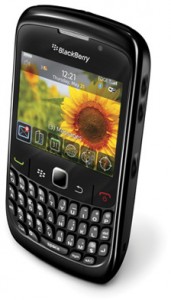
RIM recently filed a patent application showing a very interesting change to their basic Blackberry design. The patent talks about something called a “multi-tap keyboard user interface”. The intent appears to be adding auditory feedback when pressing keys to help visually impaired users.
The patent suggests that users will press a short series of keys to activate the multi-tap interface, and then use a pre-designated set of keys for typing out numbers or text. The user would be alerted via an audio queue what number or letter they have typed, and also be able to choose different menu choices while browsing their email. For all the details (such as they are) you can read the patent application yourself.
Techtyphooon
Canon Rebel T2i DSLR camera

Short version:
An outstanding consumer DSLR and liberating video recorder, the T2i is a powerhouse media device in a small and relatively affordable package. What I think of as killer features, however, may not be viewed as such by the buying population at large.
Features:
* 18-megapixel images/up to 1080p video
* ISO 100-6400
* 3″ high-resolution LCD (1040K dots/720×480px)
* Mic in and HDMI out ports
* MSRP: $800 (body only)
Pros:
* Great image and video quality
* A better camcorder than “real” camcorders at similar prices
* Beautiful LCD
Cons:
* Compact body isn’t for everyone
* Built-in flash is limited; AF strobe is a pain
* Could really use a thumb wheel
Full review:
Let me just, right of the bat, say that for serious image quality comparisons, you should head over to DP Review. I don’t have the kind of setup necessary to test chroma levels between seven different cameras at once. This review, like all our reviews, is more anecdotal than analytical. From what I’ve seen (and read), the T2i’s image quality is comparable and sometimes better than the other cameras at its price level, depending of course on the lens. I put a pair of unmodified sample shots (RAW –> JPEG) here, but the image quality of DSLRs at this level is pretty solid across the board.
But to continue: the T2i is a camera I’ve been looking forward to for a long time, I freely admit. I bought the Rebel XT, skipped the XTi, bought the XSi, and skipped the T1i. They were clearly onto something with DSLR video, I thought, but it needed more time to mature. I think the T2i is the fulfillment of the promise made with the T1i. While it’s clearly a consumer camera, it’s extremely versatile piece of electronics, almost as much so, I feel, as the Casio Exlilim FC-100 (my favorite compact camera).
Its main selling features are a highly improved LCD, a more complete video mode than its predecessor, and of course an increase in megapixels. Other than these features, the T2i is pretty much still the Digital Rebel we know and love. At $800, it’s not exactly an entry-level camera, but for enthusiasts and casual moviemakers, it’s a huge value.
The body is almost identical to earlier rebels, and slightly thicker than my XSi. the other changes I noticed are largely shared with the T1i: molded buttons instead of circular, a more aggressive cut to the hand grip, and a dedicated live view button. I found the dials to be a little bit stiffer than on my XSi, but they’ll probably loosen up with use. And is it just me, or is the movie mode at the wrong end of the dial? Maybe they should have it on both ends.
The new LCD is a smart move on Canon’s part: the T1i had a similarly high-resolution screen (this one is 720×480), but the new 3:2 aspect ratio means your photos will no longer be cropped or letterboxed when they’re displayed. If you haven’t experienced the new resolution, get ready for a treat; I’ve spent a lot less time zooming into my pictures to check focus than I did on my XSi or other DSLRs. Other than that, the interface seems unchanged, and as before the D-pad is only just sufficient for navigating your photos. I know it’s considered a high-end feature, but a thumbwheel would go a long way towards making this camera more fun to use.
The pop-up flash is still really only useful for snapshots, and focusing in low light produces the strobe effect familiar to Canon shooters, dazzling your subjects and giving them a confused look in the actual exposure. But if you’re really serious about flash photography, you probably already own a Speedlite or some such.
As I mentioned before, image quality is best tested systematically, and DP Review has that covered. The new 18 megapixel sensor certainly creates larger images, and low light performance is improved somewhat over the T1i. I still recommend setting the ISO manually to avoid unnecessary noise. Other general photography tips can be found in forums and other reviews.
Video is really the fun part of the T2i. Within seconds of trying shooting 1080p at 24 FPS, I knew the T2i was a winner. If you put a reasonably fast lens on the camera, with a decent focus ring, you’ll feel like a serious filmmaker in no time. The fidelity, sensitivity, and ease-of-use are off the chart; there are plenty of perfectly nice little camcorders out there right now, but the fact is that their image quality is pretty rotten, and low light performance is just plain terrible across the board. I’ve said some things about DSLR video, and I stand by them, but for anything less than a professional production, a T2i or 7D (or K-x or other brand of video-shooting DSLR) is a great option.
It is important that you actually want to do more than the average Flip camera. If all you want is a single button and automatic YouTube uploads, of course a $100 pocket cam will be sufficient. But for those of us frustrated by the annoying interfaces and limited customizability of current camcorders, something like the T2i is a dream come true. A few minutes of experimentation had me changing settings like a champ, playing with depth of field, manual follow focus, and so on. I won’t bore you details of the cinematic experiments I attempted, but in almost every case I’ve found that the T2i acquitted itself wonderfully. You can watch the video below, but to see it in high definition please click here!
I shot mostly at 1080/24p, but you can also shoot at 720p or 640×480, though both are inexplicably limited to 60FPS. I have no idea why that is, but it’s annoying. If people ask for it, Canon might consider putting alternate frame rates into a firmware update, but at the moment it is worth consideration if you care about that sort of thing. There’s still plenty of skew when you move the camera around quickly, which is something that’s hard to explain but you’ll notice it during playback. It’s a flaw shared by most non-pro digital video cameras, and Canon’s is better than Nikon’s right now, but it’s something to be aware of. Other than that, I found video quality to be quite good and not too affected by encoding artifacts. You’ll get some smearing, of course, but that’s the same for any device recording live to H.264. Check out this frame grab from a video that was taken in the middle of the night (late ferry) — there’s very little noise to speak of and yet the darks are dark and the brights are bright.
Keep your workflow in mind (and final product too) when shooting — I found that my computer would crash when trying to re-encode a bunch of 1080p/24 under certain circumstances, and of course most web video has 720p/30 as a reasonable maximum.
I stuck with manual focus throughout the review, despite the wimpy focus ring on my 35mm F/2, because the contrast-based autofocus is too slow for any kind of action. It was accurate, sure, but you don’t always have the luxury of a spare five seconds in which for it to work itself out, when it could be as simple as a twist of your hand. I’m sure they’ll be improving that sometime, but probably not any time soon, so if you’re uncomfortable using manual focus for video, I’d stick with the fixed focus pocket cams. They’re still great for a ton of stuff, and they’re a lot cheaper.
The downside of shooting video is pretty obvious: it drains your battery and fills up your card extremely fast. SD cards are cheap these days, but in my newfound love for high-definition video, I’ve already started filling up the hard drive on my laptop. It’ll be a while before I get that under control. One minute of 1080/30p took up about 340MB, and the lower-end VGA/60p video was a little less than half that, by my estimation.
The combination of a cropped sensor and no image stabilization means that your video will probably be pretty shaky. I’d recommend picking up a cheap or portable tripod, or looking into DIY stabilization solutions. If you don’t have a 1080p-capable monitor either, you might want to pick one of those up too. You see? It’s kind of a gateway drug.
You’ll also want to think about getting an external microphone. The on-camera mic is tiny and records in mono; sound quality varies widely and the best thing to do is to just get a small one that perhaps clips onto the hot shoe.
Conclusion
The T2i is a great success and a great value. I know I’m biased as a Canon shooter, but I think it really is the best value on the market right now for an all-purpose imaging device. Stills are excellent, video is fun. As long as you are aware of the shortcomings of digital video in general and DSLR video specifically, this is a great buy for a home video connoisseur. Beyond the improved video and body, it’s the same winning Rebel formula, backed by the same great Canon lens selection. Seriously though, if you want to shoot great video, get a fast prime with a big focus ring. It’ll hurt at first but you’ll thank yourself later.
Wednesday, May 5, 2010
HP releases new Pavilion notebooks

If there’s anything better than consumer grade sub-$800 notebooks, God kept it for himself. HP just announced the dm4, dv5, dv6, and dv7 notebooks. All are running the latest processors and the dm4 and dv7 support discrete graphics. The dv6 is a touchscreen laptop, which is great for people who like to touch their screens.
The models reflect HP’s “MUSE” (materials, usability, sensory appeal and experiences) design philosophy of fusing a rich mix of materials that create textured finishes, easy-to-use features for improved usability, a blend of artisan elements for sensory appeal, and intuitive features for simple experiences.
So that’s nice. Anyway, all available May 19. Head over to the shops.
Techtyphooon
Samsung S-Pad coming in August?

Well, we’re apparently in the time of the tablets. First it was the netbooks, then the e-book readers, and now the big thing is everyone has to have a tablet to peddle. Samsung is doing things a little differently, but I don’t know if it’ll be different enough to make an impact in the (soon to be) flooded market.
Word is, Samsung is making a 7-inch AMOLED tablet, expect to launch in South Korea in August. Like the iPad, it’ll sport 3G and Wi-fi, but it’ll also have USB and access to Samsung’s Apps. No word on pricing, we’ll let you know if we hear anything more.
Techtyphooon
Tuesday, May 4, 2010
Hands-on with the T-Mobile MyTouch 3G Slide

In a perfect world, every phone would be like the T-Mobile MyTouch Slide. It’s small, it’s light, it has a keyboard, and it’s easy enough for almost everyone to use even if it’s running one of the most powerful mobile OSes out there. Built by HTC to T-Mobile’s specifications, the MyTouch Slide with full QWERTY keyboard is, in actuallity, one of the best feature phones I’ve seen in a long time.
The second in T-Mobile’s MyTouch line, the Slide adds a keyboard and a unique user interface to the mix. Instead of My Faves, the phone allows you to create “cards” for each of your favorite contacts. From these cards you can dial them, read all their messages, and text them instantly. This, in short, “pops out” your favorite contacts with a single click.
The Slide comes in three colors and runs HTC’s sense UI with a few special T-Mo tweaks. It is, in short, a T-Mobile phone and if you’re looking for something to for texting, music, and emailing, this may be the successor to the Sidekick you’ve been looking for.
Pricing and availability will be announced later.
T-Mobile USA is announcing a new addition to its exclusive line of Android-powered T-Mobile myTouch 3G smartphones – the T-Mobile myTouch 3G Slide. Anticipated to be available in June, the new myTouch 3G Slide combines a roomy slide-out QWERTY keyboard with an incredibly crisp, high-performance touch screen powered by the latest Android software (Android 2.1). Designed to help families stay connected to those they care about most throughout their busy days, the myTouch 3G Slide offers several new, exclusive features, including:
Faves Gallery: Life is hectic so it’s easy to miss opportunities to connect with loved ones so Faves Gallery presents up to 20 of your favorite people and all of their communication – calls, texts, email, instant messaging, social networking updates – in a dedicated application accessible through a soft button and an easy-to-use widget complete with photos, contact information and one-touch ability to respond. All of your Faves get special status on your myTouch 3G Slide; anytime they communicate with you or update their social network you get a notification in the notification pane. Even if you’re not using your phone, a custom green light lets you know you’ve got a communication waiting from one of your Faves. And you can respond right from the Faves Gallery, without launching mail or social apps, so you connect more quickly and more often with the important people in your life.
myModes: myModes helps you draw the line between work and home by creating different themes with home screen apps, widgets and wallpapers to empower people in the different roles they play daily. You can program myModes to switch at a designated time, by location, or manually with the option to create and store up to 10 customize modes. myModes removes clutter and makes you more efficient both at work and at home. Want to forget about work on the weekend? No need to hide your “work phone” or switch to another device; just put away your work tools, like e-mail and your calendar by switching modes, and bring forward all the things you love to do on Saturday.
Genius Button: With the Genius Button, you press one button, talk, and it delivers. The Genius Button is an easy-to-access button on the front of the new T-Mobile myTouch 3G Slide (powered by Nuance’s Dragon Dictation solution) allowing the use of voice commands to control the phone and it’s features including making calls, compose and send texts and emails, search the web or your surroundings. The Genius Button will also read text messages aloud.
With the Android 2.1 software, the myTouch 3G Slide offers a rich mobile Web experience and access to thousands of applications on Android Market from games to location-based social networks to on-the-go shopping and more. Like the original myTouch, the new Slide was designed to facilitate personalization. A 5-pane home screen, with the option to increase to 7-panes, offers plenty of real-estate for your favorite widgets, applications and themes.
Designed by HTC exclusively for T-Mobile, the myTouch 3G Slide features a 3.4-inch HVGA touch-screen display with virtual keyboard as well as a roomy, slide-out QWERTY keyboard. Less than 15mm thick, the elegant design slides easily into your pocket proving that Android brains don’t have to come in a sci-fi box. The myTouch 3G Slide also features a 5-megapixel camera, a music player with a pre-installed 8 GB microSD memory card, and enhanced video capabilities to make it easy for users to record and share pictures and videos, whether via e-mail, MMS or one-click upload to sites such as YouTube™ and Picasa™.
Techtyphooon
Monday, May 3, 2010
There could quite possibly be a BlackBerry pad coming soon

What a treat! Based on rumor and innuendo, the Internet is all a tizzy about BlackBerry most probably potentially building a tablet.
BBLeaks feels that the “BlackPad” or the “Cobalt” will be smaller than the iPad and run the BlackBerry OS or, at the very least, be compatible with BlackBerry OS.
Sure BBLeaks could be making stuff up, but why would they. They also note that the image above is not the real BlackPad. It’s a mock-up.
*NOTE* The image used in this article is a rendition of what a BlackBerry tablet could look like. Please do not say “Hey, that’s just an iPad with BlackBerry written on it”, because you’re right, and it’s obvious.
Techtyphooon
Subscribe to:
Posts (Atom)